Discover effective techniques to improve your golf game without leaving your house. This guide offers practical tips for at-home golf practice, helping you enhance your skills and lower your scores.
- Practicing at home doesn’t require much space.
- Putt, chip, and swing fundamentals.
- Utilize training aids and technology to enhance practice sessions.
- Develop a consistent routine for noticeable improvements.
- Incorporate mental game exercises into your at-home training.
- Use household items creatively for golf-specific workouts.
- Motivate yourself by tracking your progress and setting realistic goals.
Home Golf Practice Tips
Setting Up Your Practice Area
Assess available space, invest in essential equipment, and create a dedicated practice space.
Putting Practice
Set up an indoor putting green, practice essential drills, and use technology for feedback.
Chipping and Pitching
Create a home chipping area, practice effective drills, and simulate different lies.
Full Swing Practice
Set up a home hitting area, practice full swing drills without hitting balls, and use training aids.
Fitness and Flexibility
Perform golf-specific exercises and use household items for golf fitness training.
Mental Game Practice
Practice visualization techniques and develop a consistent pre-shot routine.
Tracking Progress and Setting Goals
Keep a practice journal, set realistic home practice goals, and regularly assess your improvement.
Remember: Consistency is key to improving your golf game at home!
Practice regularly, focus on quality over quantity, and balance all aspects of your game.
Introduction

Practising consistently is the key to mastering golf, but finding time can be tough. Our complete guide to practising golf at home will help you improve.
Setting Up Your Home Golf Practice Area
Assess Your Available Space

Before diving into at-home golf practice, it’s crucial to evaluate your available space. Even small areas can be utilized effectively for certain aspects of your game.
- Measure the available space in your home or yard
- Consider using a garage, basement, or spare room for indoor practice
- Look for outdoor areas that can accommodate a hitting net or mat
Essential Equipment for Home Practice

Invest in these basic items to create an effective practice environment:
- Putting mat or indoor putting green
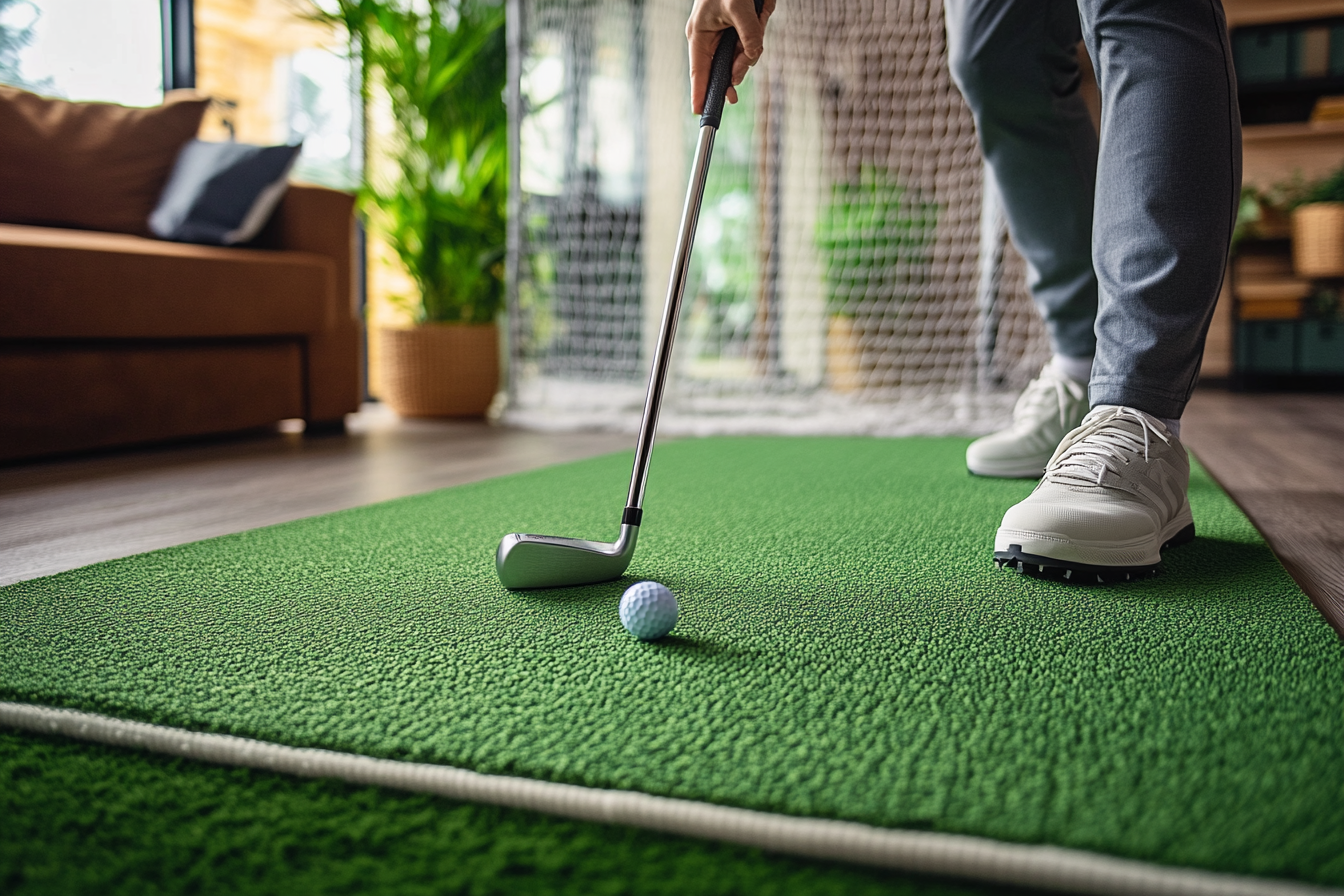
- Hit the net and mat for full swings
- Practice balls (foam or plastic for indoors, real golf balls for outdoors).
- Alignment sticks
- Full-length mirror for checking posture and alignment
Creating a Dedicated Practice Space
Set up a designated area for golf practice to encourage consistent training.
- Make sure there are no obstacles or breakable items in the space
- Ensure proper lighting for visibility
- Add golf-related decor to create an inspiring atmosphere
Putting Practice at Home

Setting Up an Indoor Putting Green
The easiest aspect of golf to practice at home is putting.
- Choose a putting mat or create a DIY putting surface
- Set up targets or use cups as holes
- Vary the length and difficulty of putts
Essential Putting Drills
Incorporate these drills into your routine to improve your putting skills:
- Distance control practice
- Alignment drills using alignment sticks
- Gate drills for improving accuracy
- Ladder drill for distance control
Using Technology for Putting Feedback
Consider investing in putting aids or technology to enhance your practice:
- Putting mirrors for checking eye position and alignment
- Digital putting analyzers for stroke analysis
- Smartphone apps for tracking progress and providing feedback
Chipping and Pitching Practice

Creating a Home Chipping Area
Set up a space for short game practice:
- Use a hitting mat or artificial turf
- Set up targets at various distances
- For indoor practice, use foam or plastic balls
Effective Chipping Drills
Improve your short game with these drills:
- Landing zone practice
- Trajectory control exercises
- Up-and-down challenges
- Clock drill for distance control
Simulating Different Lies
Create various lie situations to practice from:
- Use a thick doormat to simulate rough
- Practice from sloped surfaces for uneven lies
- Use sand or cat litter in a shallow container for bunker practice
Full Swing Practice at Home

Setting Up a Home Hitting Area
Create a safe space for full-swing practice:
- Install a hitting net in your yard or garage
- Use a hitting mat to protect floors and simulate turf
- Ensure enough ceiling height for indoor practice
Full Swing Drills Without Hitting Balls
Practice your swing mechanics without balls:
- Slow-motion swings in front of a mirror
- Alignment stick drills for path and plane
- Tempo drills using a metronome app
- Balance and weight transfer exercises
Using Training Aids for Swing Improvement
Incorporate training aids to enhance your practice:
- Swing plane trainers
- Impact bags for contact practice
- Swing speed trainers
- Weighted clubs for strength and flexibility
Fitness and Flexibility Training

Golf-Specific Exercises at Home
Improve your physical conditioning for golf:
- Core strengthening exercises
- Rotational exercises for increased power
- Balance and stability drills
- Stretching routines for improved flexibility
Using Household Items for Golf Fitness
Utilize common household items for golf-specific workouts:
- Resistance band exercises
- Broomstick drills for shoulder mobility
- Wall sits for leg strength
- Towel exercises for grip strength
Mental Game Practice

Visualization Techniques
Enhance your mental game with these exercises:
- Course visualization: Mentally play your home course
- Shot routine practice: Visualize your pre-shot routine
- Positive self-talk exercises
- Breathing and relaxation techniques
Developing a Pre-Shot Routine
Create and practice a consistent pre-shot routine:
- Establish a sequence of actions before each shot
- Every swing should be practiced, even at home
- Time your routine to ensure consistency
Tracking Progress and Setting Goals
Keeping a Practice Journal
Monitor your improvement:
- Record practice sessions and focus areas
- Note any breakthroughs or challenges
- Track scores and statistics from actual rounds
Setting Realistic Home Practice Goals
Establish achievable objectives:
- Set short-term and long-term goals
- Stick to your practice schedule
- Regularly reassess and adjust goals as needed
Incorporating Technology into Home Practice
Golf Simulators and Launch Monitors
Consider investing in technology for more detailed feedback:
- Portable launch monitors for swing data
- Home golf simulators for a more immersive experience
- Smartphone apps for swing analysis and tracking
Online Lessons and Video Analysis
Utilize digital resources for improvement:
- Schedule online lessons with a golf pro
- Use video analysis apps to review your swing
- Join online golf communities for tips and support
Advanced Practice Techniques
The Ball Return Method
When practising with a net, pay attention to how the ball returns:
| Ball Spin | Return Direction |
|---|---|
| Left (draw) | Away from feet, right of net impact |
| Right (fade) | Towards feet, left of net impact |
| Straight | Directly back to you |
Impact Practice with Stickers
Use impact stickers to improve ball striking.
- Place impact stickers on your clubface.
- Hit balls into a net and analyze where you’re making contact
- Focus on consistently hitting the sweet spot
The Book Drill for Putting
Improve your putting stroke consistency:
- Place two books on either side of your putter, leaving a small gap
- Practice your stroke between the books without hitting them
- This drill helps groove a straight back-and-through motion
Creating a Comprehensive Home Practice Routine
To maximize the effectiveness of your at-home golf practice, it’s essential to create a well-rounded routine that addresses all aspects of your game. Here’s a sample weekly practice schedule:
| Day | Focus Area | Duration | Activities |
|---|---|---|---|
| Monday | Full Swing | 30 mins | Mirror work, alignment drills, impact practice |
| Tuesday | Putting | 30 mins | Distance control, alignment drills, book drill |
| Wednesday | Chipping | 30 mins | Landing zone practice, trajectory control |
| Thursday | Mental Game | 30 mins | Visualization, pre-shot routine practice |
| Friday | Fitness | 30 mins | Core exercises, flexibility training |
| Saturday | Full Practice | 1 hour | Combine all elements, simulate on-course scenarios |
| Sunday | Rest & Review | 15 mins | Review practice journal, set goals for next week |
Remember to adjust this schedule based on your individual needs and available time.
Measuring Your Progress

To ensure your at-home golf practice yields results, it’s critical to track your progress over time.
- Putting accuracy: Track the percentage of putts made from various distances
- Precision in chipping: Measure how close your chips land to the target
- Full swing consistency: Use impact stickers to monitor strike location trends
- Mental game improvement: Note changes in confidence and focus during practice
- Physical fitness: Track improvements in flexibility, strength, and endurance
Consider creating a simple chart or spreadsheet to log these metrics weekly or monthly. This visual representation of your progress can be a great motivator and help you identify areas that need more attention.
Overcoming Common Challenges in Home Golf Practice
Golf practice at home poses unique challenges.
- Limited space:
- Focus on short game and putting
- Use nets and mats for full-swing practice in small areas
- Practice swing mechanics without hitting balls
- Noise concerns:
- Use foam or plastic practice balls
- Install sound-absorbing materials in your practice area
- Practice during times that won’t disturb others
- Lack of feedback:
- Invest in mirrors or video recording equipment
- Use alignment aids and impact stickers
- Consider portable launch monitors for detailed data
- Motivation and consistency:
- Set specific, achievable goals
- Create a structured practice schedule
- For support and accountability, join an online golf community
- Simulating on-course conditions:
- Use artificial turf with varying lies
- Practice visualization techniques
- Incorporate pressure situations into your practice routine
By anticipating and addressing these challenges, you can create a more effective and enjoyable home practice experience.
Conclusion: Mastering Golf from Home

Learning how to practice golf at home effectively can significantly improve your game, even with limited time and space. By focusing on fundamental skills, using training aids, and incorporating mental and physical exercises, you can make substantial progress in your golf performance.
Remember these key points as you embark on your at-home golf practice journey:
- Consistency: Maintaining a regular practice routine is the key to success
- Focus on quality over quantity: Short, focused sessions can be more beneficial than long, unfocused ones
- Use technology wisely: Incorporate aids and apps to enhance your practice, but don’t rely on them entirely
- Balance your practice: Address all aspects of your game, including full swing, short game, and mental preparation
- Tracking: Keeping a practice journal will help you track your progress
- Motivation: Set goals you can achieve and celebrate your progress
With dedication and the right approach, your home practice sessions can lead to noticeable improvements on the course. Whether you’re working on your putting, chipping, full swing, or mental game, consistent practice is the key to enhancing your overall golf performance.
By implementing the strategies and techniques outlined in this guide, you’ll be well on your way to becoming a better golfer, all from the comfort of your own home. Remember, every great golfer started with practice, and with the right mindset and tools, you can join their ranks. So set up your home practice area, grab your clubs, and start your journey to golf mastery today!